Home › Blog › Does Skipping Meals Help You Lose Weight?
Habits & LifestyleDoes Skipping Meals Help You Lose Weight? The Honest Answer
| Short answer | Sometimes — but only if it genuinely lowers your total intake. For many people it backfires by triggering overeating later. |
| What really matters | Your total food across the day, not how many meals you split it into. Meal frequency is a detail, not the deciding factor. |
| Do it well or not at all | If you skip, protect protein and fibre at the meals you do eat, stay hydrated, and stop if it leaves you ravenous or unwell. |
It seems like the most obvious weight-loss shortcut there is: eat fewer meals, take in fewer calories, lose weight. So does skipping meals help you lose weight? The honest answer is “it depends” — and for a lot of people, skipping meals quietly backfires. Whether it helps or hurts comes down to what happens next: does skipping actually reduce your total food for the day, or does it just push those calories, and often a few extra, into your next meal? This guide unpacks when meal skipping works, when it sabotages you, how intermittent fasting fits in, and the habits that matter far more than how many times a day you eat.
What actually drives weight loss
Before judging meal skipping, it helps to be clear on the fundamentals. Weight loss comes down to your total energy balance over time — how much you take in versus how much you use — not the number of meals you split that intake into. Eating three meals, five meals or two meals a day makes little difference in itself. What matters is the daily total. Skipping a meal only helps if it genuinely lowers that total. If you skip lunch and then eat a larger dinner plus evening snacks, you may end up with the same intake, or more, having spent the afternoon hungry and irritable for nothing.
When skipping meals backfires
For many people, skipping meals sets off a chain of events that works against them: Rebound eating is also one of the clearest routes to regain, which our guide on why you gain weight back after losing it covers in depth. (Nutrients, 2021)
- ✓ Rebound overeating. Extreme hunger from a skipped meal makes it far harder to stop at a sensible portion later — you eat past full before your body catches up.
- ✓ Worse food choices. When you are ravenous, the brain steers you toward fast, calorie-dense, sugary foods rather than a balanced plate.
- ✓ Energy crashes. Long gaps without food can leave you tired, foggy and less likely to move, which cuts into daily calorie burn.
- ✓ Evening cravings. Under-eating earlier often shows up as intense night-time cravings — the exact pattern in our guide on how to stop sugar cravings at night.
- ✓ Constant hunger. Skipping can leave you feeling hungry all day, which is miserable and unsustainable. If that sounds familiar, see why you are always hungry even after eating.
In short, skipping a meal to “save” calories often just moves them later and adds a few for good measure. It is the opposite of the calm, steady appetite that makes weight loss sustainable.

When skipping meals can work
None of this means meal skipping is always bad. For some people it is a genuinely useful tool — and that is essentially what intermittent fasting is: a structured way of skipping meals, most commonly by eating within a set window (say, eight hours) and fasting the rest of the day. It works for the people it suits because it naturally trims total intake and simplifies decisions — fewer meals to plan, fewer chances to snack. The key word is naturally. If you eat the same amount squeezed into a shorter window, no weight loss follows. (Obesity (Silver Spring), 2023)
Skipping tends to work best when:
- ✓ You genuinely are not hungry. Forcing food you do not want is as pointless as forcing yourself to skip food you need.
- ✓ It lowers your daily total. The whole point is a smaller total, not the same total rearranged.
- ✓ The meals you do eat are solid. Protein and fibre at each meal keep you full through the fast — see our guide on the best breakfast foods for weight loss for the building blocks.
- ✓ It fits your life. A pattern you dread is one you will abandon. Sustainability beats theory every time.
Support your daily routine with Valiora
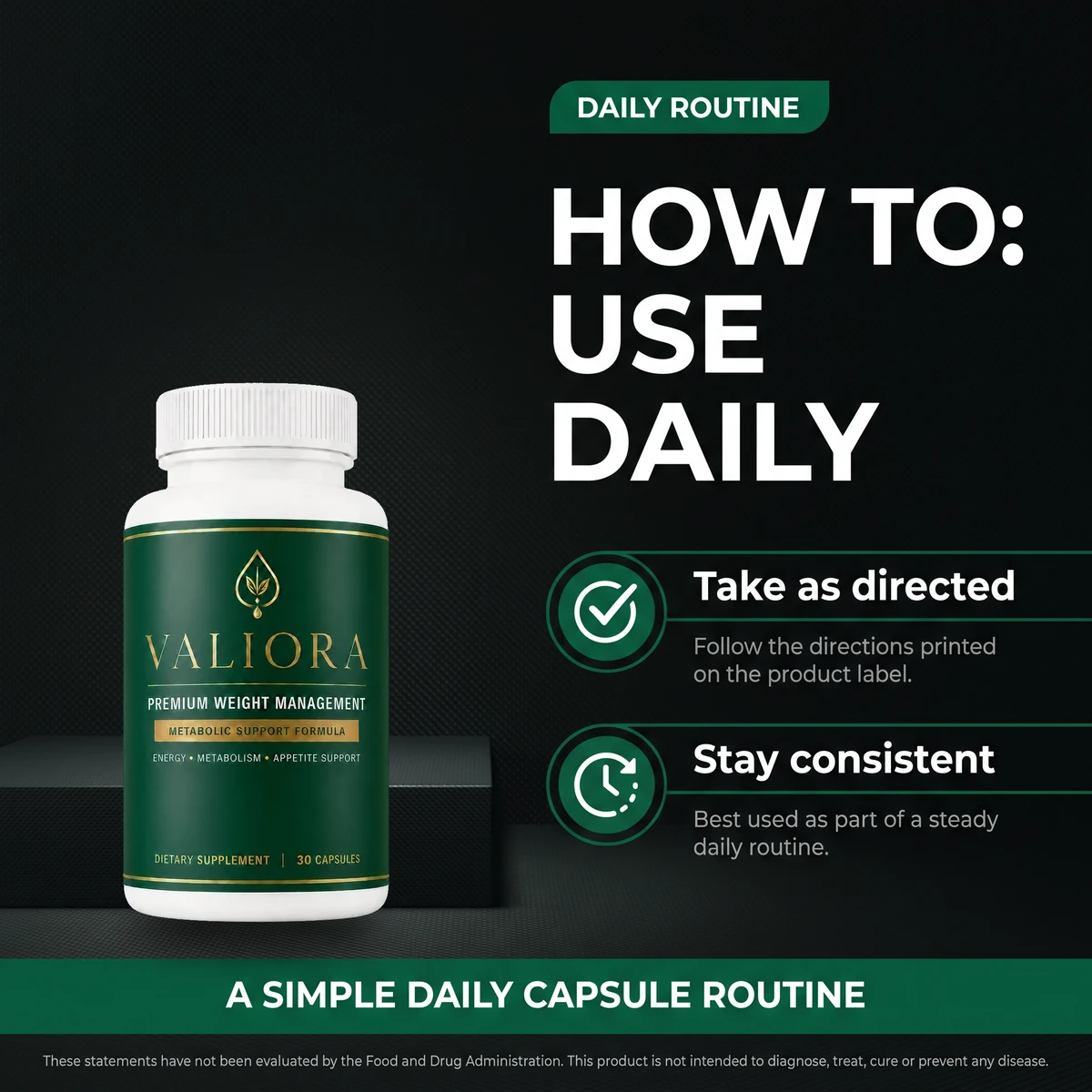
Valiora brings green tea extract, berberine, magnesium and other plant-based actives into one easy daily capsule — designed to complement balanced meals, steady blood sugar and everyday movement. Backed by a 60-day money-back guarantee.
 See Valiora Packages

Does skipping meals slow your metabolism?
One persistent myth is that skipping a meal throws your metabolism into “starvation mode” and that you must eat every few hours to keep it burning. For occasional meal skipping and short daily fasting windows, this is simply not true — missing a meal does not meaningfully slow your metabolism. What can lower your calorie burn is chronic, severe under-eating over long stretches, which also strips muscle. That is a different thing entirely from a sensible eating window, and it is the pattern that drives the frustrating cycle described in our guide on why you gain weight back after losing it. (Obesity (Silver Spring), 2020)
Who should not skip meals
Meal skipping and fasting are not right for everyone. Skip them, and talk to your doctor first, if you have a history of disordered eating, are pregnant or breastfeeding, live with diabetes or a blood-sugar condition, or feel shaky, dizzy or unwell when you go without food. For these situations, regular balanced meals are safer and more effective than any fasting approach. Listen to your body over any diet trend.
Where a supplement fits in
Your overall eating pattern does the real work; a sensible daily supplement plays a supporting role. Several plant-based ingredients are popular in metabolic and wellness formulas for their traditional use — green tea extract is rich in catechins associated with metabolism, berberine is widely used to support healthy blood-sugar balance, chromium supports normal macronutrient metabolism, and magnesium supports energy production and normal muscle function. A once-daily formula like Valiora makes that background support simple to keep up alongside a steady routine. The Valiora homepage shows how the daily routine fits together.
The bottom line
So, does skipping meals help you lose weight? Only if it genuinely lowers your total intake without triggering rebound overeating — and for many people it does the opposite. Meal frequency is a detail; your total food across the day, the quality of what you eat, and how sustainable the pattern feels matter far more. If skipping suits you and leaves you feeling good, use it. If it leaves you ravenous, foggy or bingeing at night, drop it and focus on steady, balanced meals instead.
FAQ
Does skipping meals help you lose weight?
Skipping meals can lower your calorie intake for some people, but it often backfires. Going too long without eating can leave you so hungry that you overeat later, choose higher-calorie foods and snack mindlessly. What matters most for weight loss is your total intake across the day, not how many meals it is split into. Skipping helps only if it genuinely reduces your total, not if it just shifts the calories elsewhere.
Is skipping breakfast good for weight loss?
It depends on the person. Some people naturally eat less overall when they skip breakfast, so it helps them. Others get so hungry by mid-morning that they overeat later and end up with a higher total. There is no metabolic rule that skipping breakfast either ruins or guarantees weight loss. Judge it by whether your total daily intake and energy actually improve.
Does skipping meals slow your metabolism?
Skipping the occasional meal does not meaningfully slow your metabolism, and the idea that you must eat every few hours to keep it stoked is a myth. However, very low intake over long periods can cause the body to conserve energy. Short daily fasting windows are different from chronic under-eating, which is not a healthy or sustainable approach.
Is intermittent fasting the same as skipping meals?
Intermittent fasting is a structured way of skipping meals, usually by eating within a set window such as eight hours and fasting for the rest. It works for some people because it naturally reduces total intake and simplifies eating decisions. It is not magic, though: if you eat the same amount in a shorter window, weight loss will not follow. It suits some lifestyles and not others.
Who should not skip meals?
People with a history of disordered eating, those who are pregnant or breastfeeding, people with diabetes or blood-sugar conditions, and anyone who feels shaky, dizzy or unwell when they skip meals should not skip and should speak to a doctor first. For these groups, regular balanced meals are safer and more effective than fasting or meal skipping.
References
- Association between Breakfast Skipping and Body Weight-A Systematic Review and Meta-Analysis of Observational Longitudinal Studies (Nutrients, 2021)
- A meta-analysis comparing the effectiveness of alternate day fasting, the 5:2 diet, and time-restricted eating for weight loss (Obesity (Silver Spring), 2023)
- Breakfast Skipping, Body Composition, and Cardiometabolic Risk: A Systematic Review and Meta-Analysis of Randomized Trials (Obesity (Silver Spring), 2020)
- Intermittent fasting strategies and their effects on body weight and other cardiometabolic risk factors: systematic review and network meta-analysis of randomised clinical trials (BMJ, 2025)
- National Institutes of Health, Office of Dietary Supplements — ingredient fact sheets.
Every citation above was checked against its PubMed record on 3 September 2026. Research on an individual nutrient or habit is not evidence about any finished product.
† These statements have not been evaluated by the FDA. This product is not intended to diagnose, treat, cure or prevent any disease. This article is for general information only and is not medical advice. Affiliate disclosure: this is an independent guide, not the manufacturer. Some links here are affiliate links and we may earn a commission — at no extra cost to you — if you buy through them.