Home › Blog › Why Do I Gain Weight Back After Losing It?
Causes & LifestyleWhy Do I Gain Weight Back After Losing It? Causes and Fixes
| Short answer | Weight regain is mostly biology, not willpower. After loss, the body burns less and hungers more to defend its old weight. |
| The usual traps | Crash diets that strip muscle, temporary rules that end with the diet, and losing weight faster than habits can catch up. |
| What keeps it off | Slow loss, enough protein and muscle, steady movement, sleep, stress control — habits you keep for life, not a diet you finish. |
You did the hard work. The weight came off, the clothes fit, and then — slowly at first, then faster — it crept back. If you are asking “why do I gain weight back after losing it?” the first thing to know is that you are not weak, and you are not alone. Weight regain is one of the most common and best-documented patterns in weight management, and most of it is driven by biology rather than a failure of willpower. This guide explains what is really happening in your body after weight loss, why crash diets almost guarantee regain, and the everyday habits that make lost weight stay lost.
Your body defends its old weight
The central reason weight comes back is that your body actively fights to return to its previous weight — a concept researchers call the set point. When you lose fat, your body reads it as a threat and responds on two fronts at once. It lowers the number of calories you burn (a process called adaptive thermogenesis), and it raises hunger hormones like ghrelin while lowering fullness hormones like leptin. The result: you burn a little less and feel a little hungrier than someone of the same weight who never dieted. That gap is small day to day, but over weeks it quietly pulls the weight back on unless your habits hold firm. (Int J Obes (Lond), 2015)
Understanding this changes everything. Regain is not proof that you failed — it is a predictable biological headwind. The strategy that beats it is not more willpower but smarter, more durable habits.
The main reasons weight comes back
On top of set-point biology, a handful of everyday factors turn a small headwind into full regain: (Clin Nutr ESPEN, 2022)
- ✓ Crash diets strip muscle. Very fast, very low-calorie diets burn muscle along with fat. Less muscle means a lower resting metabolism, so you burn fewer calories even at rest.
- ✓ The diet had an end date. If your weight loss relied on temporary rules — cutting out whole food groups, extreme restriction — the weight returns the moment normal life resumes.
- ✓ Habits never actually changed. Losing weight is a project; keeping it off is a lifestyle. If the underlying routines around food, movement and sleep did not change, the old results return.
- ✓ Hunger and cravings win out. Heightened appetite after dieting makes it easy to drift back to bigger portions and old snacks without noticing.
- ✓ Life stress and poor sleep. Both raise appetite and cravings, nudging you back toward comfort eating and less movement.
This is the anatomy of yo-yo dieting — lose fast, regain, repeat — and each cycle can make the next harder because of the muscle lost along the way.
How to keep the weight off for good
The good news: while your body resists change, the habits that prevent regain are well understood and entirely learnable. The theme running through all of them is sustainability — choosing things you can keep doing long after the scale settles. (J Clin Endocrinol Metab, 2021)
1. Lose weight slowly
Slow, steady loss protects muscle and gives your habits time to catch up with your body. Aiming to lose a modest amount per week is far more durable than a dramatic crash.
2. Protect your muscle
Eat enough protein and include some resistance training — even bodyweight exercises. Muscle is metabolically active, so keeping it keeps your calorie burn higher. This ties directly into our guide on how to speed up a slow metabolism for weight loss.
3. Keep moving every day
Everyday movement is one of the biggest, most controllable parts of daily calorie burn. Our guide on how many steps a day to lose weight shows how to build it into a busy life without extra gym time.
4. Prioritise sleep and manage stress
Short sleep and high stress both crank up appetite and cravings, quietly undermining maintenance. Our guides on how poor sleep causes weight gain and whether stress and cortisol cause weight gain are worth pairing here.
5. Treat maintenance as the real goal
People who keep weight off tend to keep light-touch habits going for good — a regular weigh-in, a steady eating pattern, consistent movement. Maintenance is not the boring bit after the finish line; it is the finish line.
Support your maintenance routine with Valiora
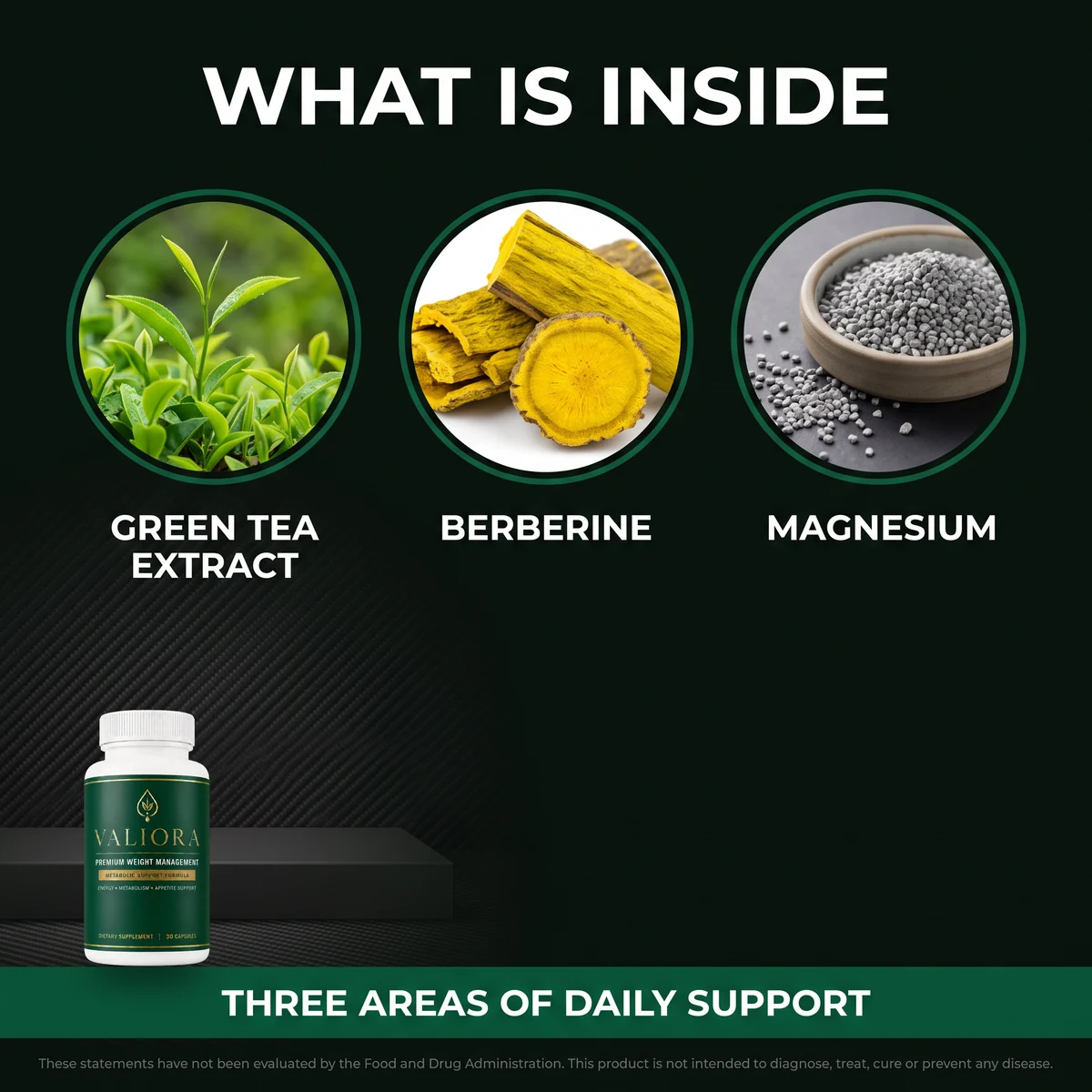
Valiora brings green tea extract, berberine, magnesium and other plant-based actives into one easy daily capsule — designed to complement steady meals, protein, movement and good sleep. Backed by a 60-day money-back guarantee.
 See Valiora Packages
Breaking the yo-yo cycle
If you have ridden the weight-loss-and-regain rollercoaster before, the way off it is not another, stricter diet — it is a gentler, permanent one. Swap all-or-nothing rules for changes you barely notice: a protein-rich weight-loss breakfast, a walk after dinner, a consistent bedtime, water instead of sugary drinks. Because these are livable, they do not end — and neither do their results. When progress stalls along the way (as it always does), our guide on how to break a weight loss plateau explains why that is normal and what to adjust.
Where a supplement fits in
Habits do the real work; a sensible daily supplement plays a supporting role in a maintenance routine. Several plant-based ingredients are popular in metabolic and wellness formulas for their traditional use — green tea extract is rich in catechins associated with metabolism, berberine is widely used to support healthy blood-sugar balance, chromium supports normal macronutrient metabolism, and magnesium supports energy production and normal muscle function. A once-daily formula like Valiora makes that background support simple to keep up as part of a lasting routine. The Valiora homepage shows how the daily routine fits together.
The bottom line
Why do you gain weight back after losing it? Because your body is built to defend its old weight, and crash diets that strip muscle and end abruptly play straight into that biology. The fix is not more willpower — it is losing weight slowly, protecting muscle, moving daily, sleeping well and choosing habits you can keep forever. Treat maintenance as the goal, and lost weight is far more likely to stay lost.
FAQ
Why do I gain weight back after losing it?
Weight regain is common and largely biological, not a lack of willpower. After weight loss, the body lowers its calorie burn and raises hunger hormones to defend its previous weight, a response sometimes called the set point. Add crash diets that strip muscle and short-term habits that end when the diet ends, and the lost weight tends to creep back. Slow, habit-based change is far more durable.
What is yo-yo dieting and why is it a problem?
Yo-yo dieting is the cycle of losing weight quickly, regaining it, then dieting again. Rapid diets often strip muscle along with fat, which lowers metabolism, and the extreme rules are impossible to sustain. When normal eating resumes, weight returns, often with a little extra. Breaking the cycle means choosing changes you can keep for good rather than another short, severe diet.
Does losing muscle cause weight regain?
It contributes. Muscle is metabolically active tissue, so losing it during a crash diet lowers the number of calories you burn at rest. Return to normal eating and it is easier to regain fat. Keeping enough protein and doing some resistance training during weight loss helps preserve muscle and makes the result easier to maintain.
How do I keep weight off for good?
Focus on habits you can keep forever rather than a temporary diet: enough protein and fibre, regular movement and steps, good sleep, managed stress and a realistic eating pattern. Lose weight slowly, preserve muscle, and treat the maintenance phase as the real goal. People who keep weight off tend to keep monitoring their habits long after the scale settles.
Is weight regain my fault?
No. Weight regain is a normal, well-documented biological response, not a moral failing. The body actively defends its previous weight through hunger and metabolism, so regain after a strict diet is expected rather than exceptional. Understanding this helps you swap self-blame for a smarter, sustainable strategy built on lasting habits.
References
- Physiological adaptations to weight loss and factors favouring weight regain (Int J Obes (Lond), 2015)
- Understanding weight regain after a nutritional weight loss intervention: Systematic review and meta-analysis (Clin Nutr ESPEN, 2022)
- Long-Term Weight Loss Strategies for Obesity (J Clin Endocrinol Metab, 2021)
- American College of Sports Medicine Position Stand. Appropriate physical activity intervention strategies for weight loss and prevention of weight regain for adults (Med Sci Sports Exerc, 2009)
- National Institutes of Health, Office of Dietary Supplements — ingredient fact sheets.
Every citation above was checked against its PubMed record on 3 September 2026. Research on an individual nutrient or habit is not evidence about any finished product.
† These statements have not been evaluated by the FDA. This product is not intended to diagnose, treat, cure or prevent any disease. This article is for general information only and is not medical advice. Affiliate disclosure: this is an independent guide, not the manufacturer. Some links here are affiliate links and we may earn a commission — at no extra cost to you — if you buy through them.