Home › Blog › Best High-Fiber Foods for Weight Loss
Causes & LifestyleBest High-Fiber Foods for Weight Loss and Appetite Control
| Why fibre helps | High-fiber foods add bulk, slow digestion and steady blood sugar, so you feel full on fewer calories and snack less. |
| Best choices | Beans and lentils, oats, chia and flax, berries, apples and pears, avocado, broccoli, nuts and whole grains. |
| How to start | Add fibre gradually, pair it with protein and water, and choose whole foods over processed “added-fibre” products. |
If you want one dietary change with an outsized effect on appetite, it is this: eat more fibre. The best high-fiber foods for weight loss are not exotic or expensive — they are everyday beans, oats, fruit, vegetables and seeds — and they work by making you feel genuinely full on fewer calories. Most people eat only about half the fibre they need, which is one quiet reason hunger and snacking feel so hard to control. This guide explains how fibre helps, lists the most filling high-fiber foods to reach for, and shows how to add them without the bloating that puts people off.
How fibre helps you lose weight
Fibre is the part of plant foods your body cannot fully digest. That sounds unremarkable, but it is exactly why fibre is so useful for weight management. It works in several ways at once: (Am J Clin Nutr, 2020)
- ✓ It fills you up for fewer calories. Fibre adds bulk and takes up room in the stomach, so high-fiber meals are more satisfying than the same calories from refined foods.
- ✓ It slows digestion. Food leaves the stomach more slowly, so fullness lasts longer and hunger returns later.
- ✓ It steadies blood sugar. Soluble fibre slows the release of sugar into the blood, softening the spikes and crashes that trigger cravings.
- ✓ It feeds your gut. Fibre is food for helpful gut bacteria, which is increasingly linked to appetite and overall metabolic health.
If you often feel hungry again soon after eating, fibre is one of the biggest missing pieces — our guide on why you feel hungry even after eating explains how it pairs with protein to keep you satisfied.
Soluble vs insoluble fibre
You will see both terms. Soluble fibre dissolves into a gel — think oats, beans, apples and chia — and is especially good for satiety and steady blood sugar. Insoluble fibre adds bulk and keeps digestion moving — think whole grains, vegetable skins and nuts. You do not need to track which is which; eating a variety of whole plant foods gives you both.
The best high-fiber foods to reach for
Here are the everyday champions — filling, affordable and easy to work into meals you already eat. (Am J Clin Nutr, 2016)
Beans, lentils and chickpeas
Legumes are among the most fibre-dense foods available, and they bring protein too — a rare and powerful combination for appetite control. Add them to soups, salads, curries and pasta sauces, or blend chickpeas into hummus.
Oats
Oats are rich in a soluble fibre called beta-glucan that is well studied for fullness and steady energy. A bowl of porridge or overnight oats with berries is one of the most satisfying breakfasts you can build.
Chia and flax seeds
A tablespoon or two adds a big fibre boost with barely any effort. Stir chia into yogurt or oats, or sprinkle ground flax over almost anything.
Berries, apples and pears
Berries are low in sugar and high in fibre, and apples and pears (eaten with the skin) are among the most filling fruits. They satisfy a sweet tooth while working with your appetite rather than against it.
Avocado
Creamy, filling and high in fibre plus healthy fats, avocado makes meals more satisfying — a good example of a food that helps you eat less overall without feeling deprived.
Broccoli, Brussels sprouts and leafy greens
Cruciferous and leafy vegetables deliver a lot of fibre and volume for very few calories, so you can fill half your plate and stay comfortably within a modest deficit.
Whole grains and nuts
Swapping refined grains for whole ones — brown rice, whole-grain bread, quinoa — and adding a small handful of nuts as a snack both raise your daily fibre and keep hunger at bay.
How to eat more fibre without the bloating
The most common mistake is going from very little fibre to a huge amount overnight, which can cause gas, bloating and cramping. A gentle ramp-up keeps things comfortable: Fluid matters as much as the ramp-up speed here, which is why our guide on whether drinking water helps you lose weight is a useful companion to this one. (Lancet, 2019)
- ✓ Add it gradually. Increase over a couple of weeks rather than all at once so your gut adjusts.
- ✓ Drink more water. Fibre works best with fluid; without it, more fibre can actually cause discomfort.
- ✓ Spread it across the day. Some fibre at each meal is easier to digest than a single enormous serving.
- ✓ Choose whole foods first. Whole plant foods beat processed products with “added fibre,” which do not always deliver the same fullness.
- ✓ Pair fibre with protein. The two together are the most satisfying combination and the backbone of any appetite-friendly plate.
General guidance points to roughly 25–38 grams of fibre a day for adults; most people manage only about half. If persistent bloating is a problem for you even on a sensible plan, our guide on why you feel bloated and how to reduce it covers the everyday causes.
Support your routine with Valiora
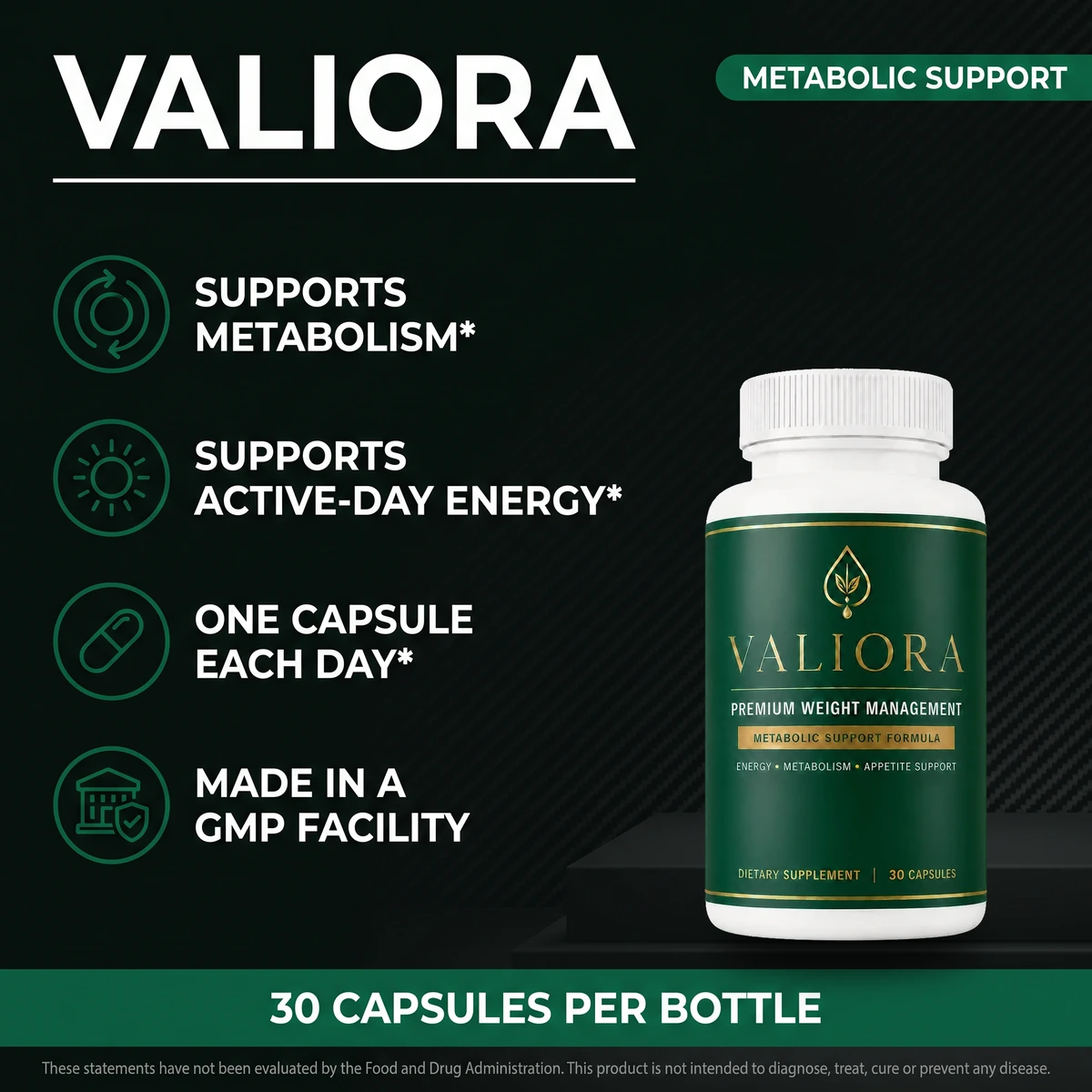
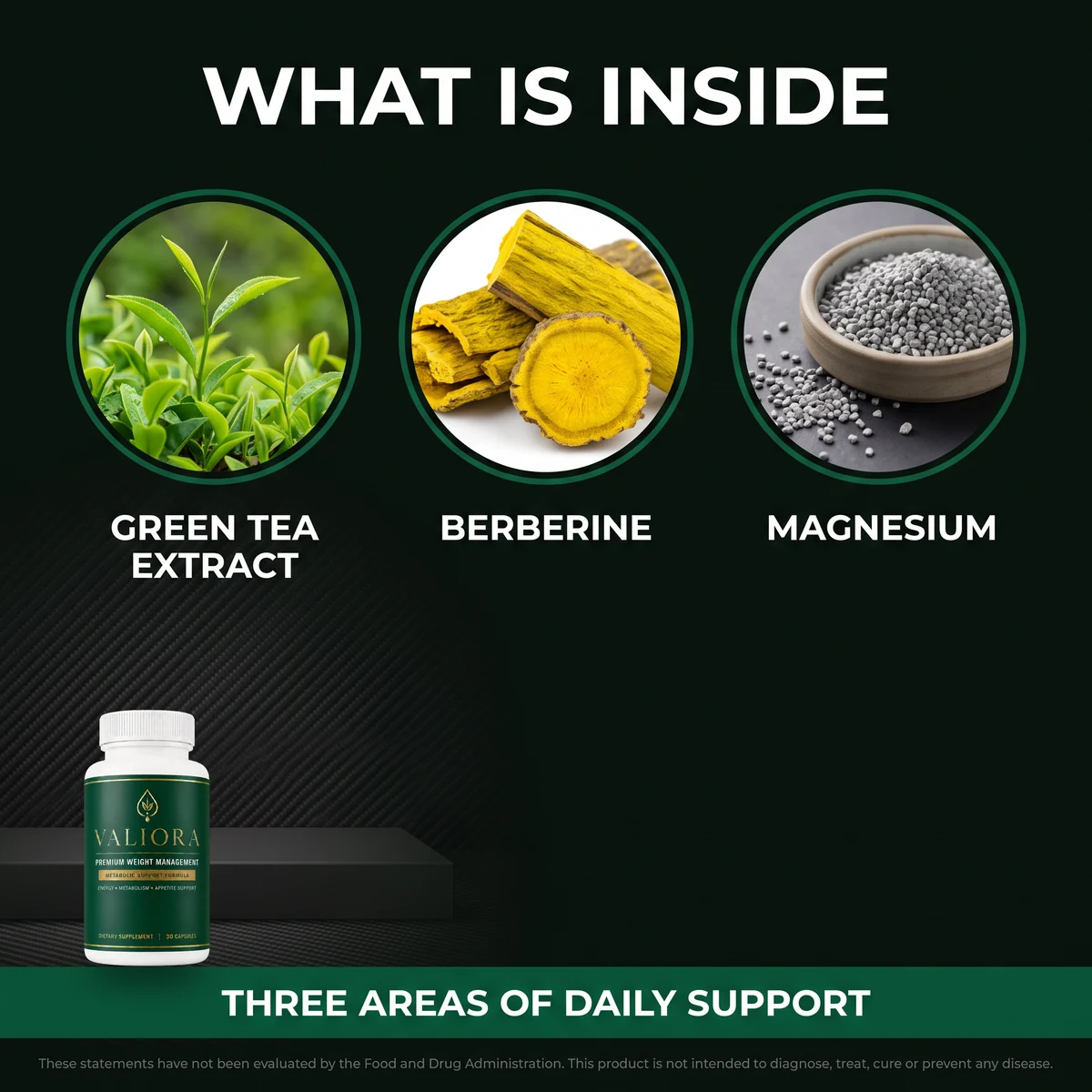
Valiora brings green tea extract, berberine, magnesium and other plant-based actives into one easy daily capsule — designed to complement a fibre-rich, protein-anchored way of eating. Backed by a 60-day money-back guarantee.
 See Valiora Packages
Where a supplement fits in
Let’s be honest: food does the real work here, and no capsule replaces a plate of beans, oats and vegetables. What a sensible daily supplement can do is round out a good routine. Several plant-based ingredients are popular in metabolic formulas for their traditional use — green tea extract is rich in catechins associated with metabolism, berberine is widely used to support healthy blood-sugar balance, chromium supports normal macronutrient metabolism, and magnesium supports energy production. A once-daily formula like Valiora makes that background support easy to maintain alongside a fibre-forward diet.
The mindset that works: the supplement supports your effort; the food is still the engine. If stubborn weight around the middle is your main concern, our guide on what causes belly fat and how to reduce it pairs well with this one.
A simple starting plan
Do not overhaul everything at once. Pick two easy swaps this week — say, oats with berries for breakfast and a cup of beans added to your usual dinner — drink a little more water, and let those become automatic before adding more. Small, repeatable changes to what is on your plate quietly reshape your appetite over a few weeks. For the wider picture on how daily habits fit together, the Valiora homepage lays it out.
The takeaway: fibre is one of the most underused tools in weight management. Fill your plate with beans, oats, fruit, vegetables, nuts and seeds; add them gradually with plenty of water; pair them with protein — and you will feel fuller on fewer calories without ever going hungry.
FAQ
How does fibre help with weight loss?
Fibre adds bulk and slows digestion, so high-fiber foods fill you up on fewer calories and keep you satisfied for longer. Soluble fibre in particular forms a gel that slows the release of sugar into the blood, steadying energy and reducing the crashes that trigger snacking. Fibre also feeds helpful gut bacteria.
What are the best high-fiber foods for weight loss?
Beans and lentils, oats, chia and flax seeds, berries, apples and pears with the skin, avocado, broccoli and Brussels sprouts, whole grains, nuts, and vegetables like carrots and leafy greens are among the most filling, everyday high-fiber choices. Whole plant foods beat processed ones with added fibre.
How much fibre should I eat a day?
General guidance suggests roughly 25 to 38 grams of fibre a day for adults, yet most people eat only about half that. Increase it gradually over a couple of weeks and drink plenty of water so your digestion adjusts comfortably rather than all at once.
Can too much fibre cause problems?
Ramping fibre up too fast, especially without enough water, can cause bloating, gas or cramping. The fix is to add high-fiber foods gradually, spread them across the day, and stay well hydrated. If you have a digestive condition, check with your doctor before making big changes.
Is a fibre supplement as good as high-fiber foods?
Whole foods are the better foundation because they bring fibre alongside vitamins, minerals and protein. A fibre supplement can help fill a gap, but it does not replace the fullness and nutrition of beans, oats, fruit and vegetables. Aim to get most of your fibre from food first.
References
- Can dietary viscous fiber affect body weight independently of an energy-restrictive diet? A systematic review and meta-analysis of randomized controlled trials (Am J Clin Nutr, 2020)
- Effects of dietary pulse consumption on body weight: a systematic review and meta-analysis of randomized controlled trials (Am J Clin Nutr, 2016)
- Carbohydrate quality and human health: a series of systematic reviews and meta-analyses (Lancet, 2019)
- The efficacy of glucomannan supplementation in overweight and obesity: a systematic review and meta-analysis of randomized clinical trials (J Am Coll Nutr, 2014)
- National Institutes of Health, Office of Dietary Supplements — ingredient fact sheets.
Every citation above was checked against its PubMed record on 3 September 2026. Research on an individual nutrient or habit is not evidence about any finished product.
† These statements have not been evaluated by the FDA. This product is not intended to diagnose, treat, cure or prevent any disease. This article is for general information only and is not medical advice. Affiliate disclosure: this is an independent guide, not the manufacturer. Some links here are affiliate links and we may earn a commission — at no extra cost to you — if you buy through them.