Home › Blog › How to Stop Emotional Eating
Causes & LifestyleHow to Stop Emotional Eating: Why It Happens and Habits That Help
| The problem | Emotional eating is using food to soothe a feeling — stress, boredom, sadness — rather than to satisfy real hunger. |
| Why willpower fails | Skipped meals, poor sleep and high stress make cravings bigger, so “just resisting” sets you up to lose. |
| What helps | Steady protein-rich meals, better sleep, a pause before eating, non-food comforts, and making trigger foods less convenient. |
You just finished dinner, you are not remotely hungry, and yet twenty minutes later you find yourself standing at the pantry reaching for something sweet or salty. Sound familiar? That is emotional eating — using food to manage a feeling rather than to fuel your body — and it is one of the most common reasons people struggle to lose weight even when they “know what to do.” The habit is not a character flaw, and the fix is not simply trying harder. This guide explains why emotional eating happens and the practical, everyday habits that help you stop emotional eating without white-knuckling your way through every evening.
What emotional eating actually is
Emotional eating is turning to food to soothe or distract from an emotion. The feeling can be obvious — stress after a hard day, sadness, loneliness — or so subtle you barely notice it, like boredom or restlessness. Even good feelings count: many people eat to celebrate or to keep a happy moment going. The common thread is that the eating is driven by a mood, not by an empty stomach, and it usually centres on comfort foods high in sugar, fat or salt. (Int J Environ Res Public Health, 2023)
Here is the important part: this is normal human behaviour, not a rare weakness. Food has been tied to comfort, reward and connection since childhood. The goal is not to feel guilty about it — guilt tends to fuel the cycle — but to understand the pattern well enough to change it.
Emotional hunger vs physical hunger
The single most useful skill is learning to tell the two apart. They feel different once you know what to look for.
- ✓ Physical hunger builds slowly. Emotional hunger arrives suddenly and feels urgent.
- ✓ Physical hunger is flexible. Almost any food will do. Emotional hunger demands a specific comfort food — only the chocolate or the crisps will satisfy it.
- ✓ Physical hunger sits in the stomach. Emotional hunger feels like it lives “above the neck” — a craving in the mouth and mind.
- ✓ Physical hunger switches off when you are full. Emotional hunger often keeps going past fullness and can leave guilt or regret behind.
You do not have to get this right every time. Simply pausing to ask “is this stomach hunger or mood hunger?” interrupts the automatic reach and gives you a moment of choice.
Why willpower alone keeps failing
If you have tried to “just stop” and it hasn’t worked, the problem usually isn’t your discipline — it is that the deck is stacked against you before the craving even starts. A few everyday conditions make cravings far larger and harder to resist: (Psychoneuroendocrinology, 2015)
- ✓ Skipped or low-protein meals. Eating too little during the day leaves you physically under-fed by evening, so an emotional trigger meets real hunger and the urge feels enormous.
- ✓ Poor sleep. Short sleep raises the hunger hormone ghrelin and blunts self-control, which is why cravings feel unstoppable when you are tired — see how poor sleep causes weight gain.
- ✓ Chronic stress. Ongoing stress keeps cortisol elevated, and cortisol both raises appetite and steers you toward sugary, fatty foods — our guide on stress, cortisol and weight gain digs into the physiology.
- ✓ Highly convenient trigger foods. If the treat is an arm’s reach away, you rely on willpower dozens of times a day — and willpower is a finite resource.
The lesson: shrink the craving before you ever have to resist it. That is what most of the habits below are designed to do.
Habits that help you stop emotional eating
These are the levers with the best track record. Start with the ones that remove the fuel — steady meals and sleep — because they make everything else easier. (Eur Eat Disord Rev, 2023)
1. Eat enough, and eat protein first
Regular, protein-rich meals keep blood sugar and appetite steady so you are not physically ravenous when a feeling hits. A palm-sized portion of protein at each meal — eggs, fish, poultry, Greek yogurt, beans or tofu — is the foundation. If you often feel hungry soon after eating, our guide on why you feel hungry even after eating explains what to adjust.
2. Build a pause between urge and action
When a craving hits, set a five-minute timer before you eat. Drink a glass of water, step outside, or do one small task. The urge often crests and fades. If after five minutes you are still hungry and it feels physical, eat mindfully — the pause is about choice, not deprivation.
3. Name the feeling
Ask yourself: what am I actually feeling right now — tired, stressed, bored, lonely? Naming the emotion is a surprisingly powerful circuit-breaker, because it reconnects the craving to its real source and reminds you that food will not fix it.
4. Keep a short list of non-food comforts
Emotional eating fills a real need for soothing; the trick is to meet that need another way. Have a ready list: a walk, a hot shower, a phone call, music, ten minutes of a book, stretching. Decide in advance so you are not choosing while the craving is loud.
5. Make trigger foods less convenient
You do not have to ban anything, but you can add friction. Keep tempting foods out of sight or out of the house, and keep easy, satisfying options — fruit, yogurt, nuts — front and centre. Willpower works best when you need it least.
6. Protect your sleep and lower stress
Because tiredness and stress are two of the biggest craving amplifiers, treating seven to nine hours of sleep and a daily stress-release habit as part of your plan does more than any evening battle of willpower.
Support your routine with Valiora
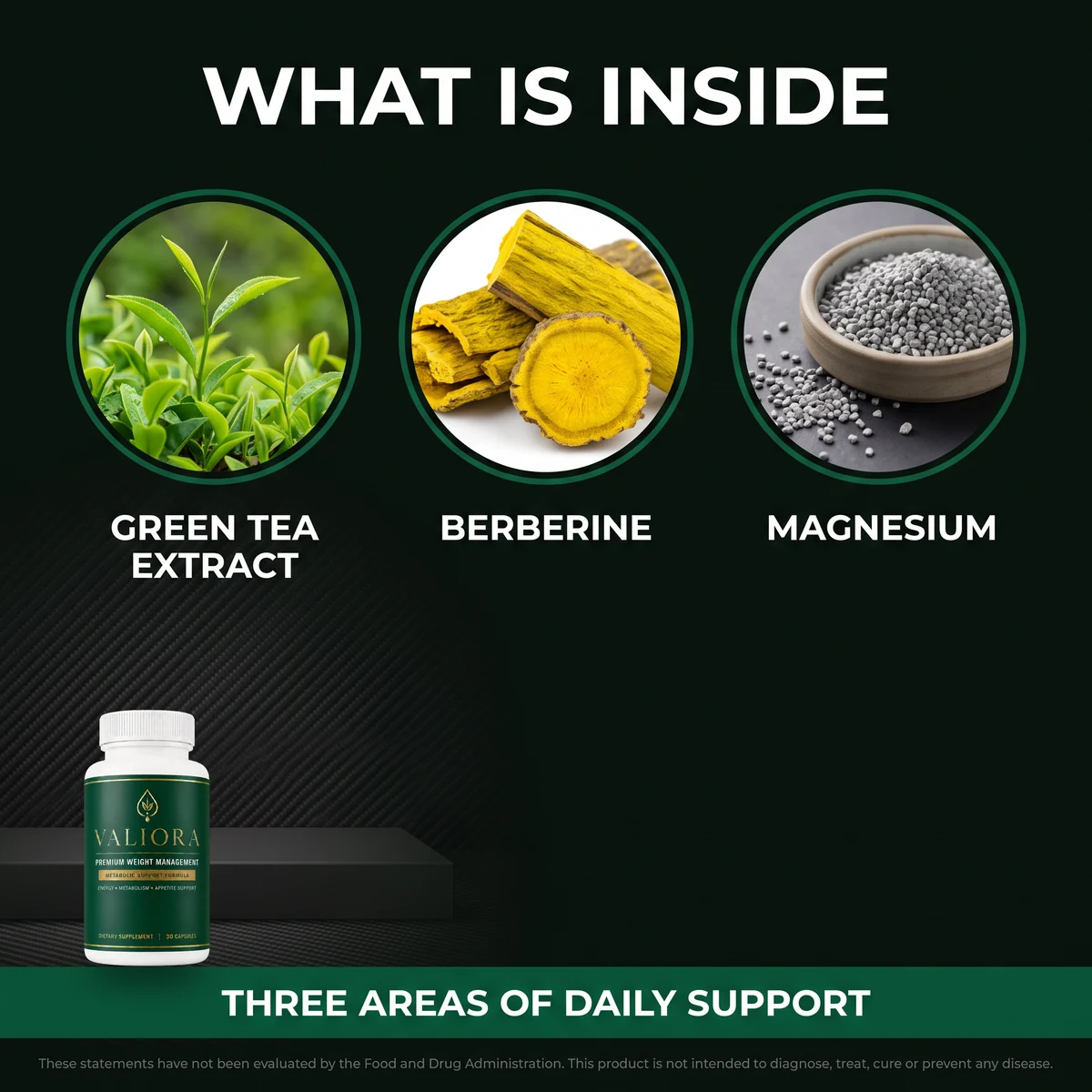
Valiora brings green tea extract, berberine, magnesium and other plant-based actives into one easy daily capsule — designed to complement steady meals, better sleep and everyday appetite support. Backed by a 60-day money-back guarantee.
 See Valiora Packages
Where a supplement fits in
Let’s be clear: no capsule stops emotional eating on its own — that is a habit change, not a nutrient. What a sensible daily supplement can do is support the steady, well-fed baseline that makes cravings smaller in the first place. Several plant-based ingredients are popular in metabolic and appetite-support formulas for their traditional use — green tea extract is rich in catechins associated with metabolism, berberine is widely used to support healthy blood-sugar balance, chromium supports normal macronutrient metabolism, and magnesium supports energy and restful sleep. A once-daily formula like Valiora makes that background support easy to keep up while you build the habits above.
The mindset that works: the supplement supports your effort; your effort is still the engine. If your particular weak spot is the after-dinner sweet tooth, pair this with our practical guide on how to stop sugar cravings at night.
Be kind to yourself — it works better
One last, genuinely important point: guilt is not a strategy. Beating yourself up after an emotional-eating episode raises stress, which raises cravings, which makes the next slip more likely. The people who change this pattern are not the ones who never slip — they are the ones who notice, shrug, and get straight back to their steady routine. Aim for progress, not a perfect record. For the wider picture on how a simple daily routine fits together, the Valiora homepage lays it out.
The takeaway: emotional eating is a learned coping habit, and habits can be reshaped. Feed yourself properly, sleep, lower stress, and put a small pause between the feeling and the food. Do that most days and the pantry stops calling nearly as loudly.
FAQ
What is emotional eating?
Emotional eating is turning to food to soothe a feeling rather than to satisfy physical hunger. Stress, boredom, loneliness, sadness and even happiness can trigger it. It usually shows up as a sudden, specific craving for comfort foods, comes on fast, and often leaves you feeling worse afterward.
How do I tell emotional hunger from real hunger?
Physical hunger builds gradually, is open to many foods, sits in the stomach and eases once you are full. Emotional hunger arrives suddenly, demands a specific comfort food, feels urgent and above the neck, and tends not to switch off even when you are full. Pausing to name the feeling is the fastest way to tell them apart.
How do you stop emotional eating?
Remove the fuel first: eat enough protein and fibre at regular meals, sleep well and lower background stress so cravings are smaller to begin with. Then build a pause between the urge and the food, keep a short list of non-food comforts, and make trigger foods less convenient at home. Progress, not perfection, is the goal.
Is emotional eating the same as a food addiction?
No. Emotional eating is a very common coping habit, not a clinical diagnosis. For most people it responds well to steadier meals, better sleep, stress care and a few simple routines. If eating feels genuinely out of control or is tied to distress, it is worth speaking with a doctor or a qualified therapist.
Will a supplement stop my cravings?
No supplement stops emotional eating by itself. Plant-based ingredients such as green tea extract, berberine and chromium are traditionally linked to metabolism and healthy blood-sugar balance, which can support a steady baseline, but the real change comes from steadier meals, sleep, stress care and the pause-and-name habit.
References
- Emotional Eating Interventions for Adults Living with Overweight or Obesity: A Systematic Review and Meta-Analysis (Int J Environ Res Public Health, 2023)
- Hypothalamic-pituitary-adrenal axis dysregulation and cortisol activity in obesity: A systematic review (Psychoneuroendocrinology, 2015)
- 'Mindful eating' for reducing emotional eating in patients with overweight or obesity in primary care settings: A randomized controlled trial (Eur Eat Disord Rev, 2023)
- Effects of mindfulness-based interventions on obesogenic eating behaviors: A systematic review and meta-analysis (Obes Rev, 2025)
- National Institutes of Health, Office of Dietary Supplements — ingredient fact sheets.
Every citation above was checked against its PubMed record on 3 September 2026. Research on an individual nutrient or habit is not evidence about any finished product.
† These statements have not been evaluated by the FDA. This product is not intended to diagnose, treat, cure or prevent any disease. This article is for general information only and is not medical advice. Affiliate disclosure: this is an independent guide, not the manufacturer. Some links here are affiliate links and we may earn a commission — at no extra cost to you — if you buy through them.